Stage guide

Seaming and taping a dance floor.

Performance vinyl has to be invisible underfoot, hold through a run, and come up clean. That is a different job from general taping.

What the tape has to do

Seaming a performance surface is a different job from general taping.

A vinyl performance floor is laid in strips, and the seams between them have to be invisible underfoot, hold through a full run, and come up without marking the vinyl. That rules out cloth tape: the woven edge lifts under turning feet, and the adhesive is not formulated for vinyl-to-vinyl contact. Dance floor tape is premium vinyl tape with a low-profile edge, made for seaming and joining dance floors, stage vinyl and temporary performance surfaces.

There is a second reason the surface has to be smooth: it protects the dancer's feet. Dancers often work barefoot or in soft shoes, and a cotton gaffer tape seam is abrasive — the woven texture and raised edge catch and graze the foot on every turn. A flat vinyl seam gives a clean, gentle surface to dance across.

Laying and seaming

Method.

  • Let the vinyl relax first. Roll it out and leave it in the room to settle before taping — vinyl expands and contracts with temperature, and taping a cold, tightly rolled floor guarantees ripples later.
  • Clean the subfloor and the vinyl edges. Any grit under a seam becomes a bump a dancer will feel through a soft shoe.
  • Butt the strips, do not overlap them. The edges should meet with no gap and no ride-up. An overlap is a ridge and a hazard.
  • Centre the tape over the seam and press along its length so both halves bond evenly. Uneven pressure is what makes one side lift first.
  • Work in one direction along the seam rather than tacking at intervals and filling in — that traps air and creates soft spots.
  • Tape the perimeter where the floor meets the stage edge, so nothing catches when performers exit.
Removal and reuse

Getting the floor back up.

Lift slowly, at a low angle

Pulling straight up puts the force into the vinyl rather than the adhesive line. A slow pull back along the seam releases the tape and leaves the surface undamaged.

Do not leave it down indefinitely

Clean removal is a function of time and heat as much as the tape itself. A floor taped for a season will fight you more than one taped for a week. Plan re-taping into long runs.

Published technical data

Why 6 mils and low adhesion matter.
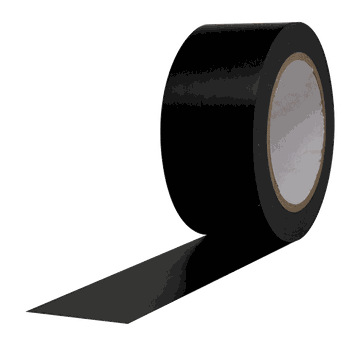
Pro Splice 50 vinyl dance floor tape, black

Pro Splice — Vinyl Dance Floor Tape

BackingVinyl film
AdhesiveNatural rubber resin
Thickness6 mils
Tensile strength18 lbs/in
Adhesion to steel12.6 oz/in
Government specPPP-T-66D, Type 1
MarkingSatisfies OSHA marking requirements (US safety standard)

6 mils and 12.6 oz/in adhesion to steel — low profile, and a deliberately gentle grip so it releases from performance vinyl.
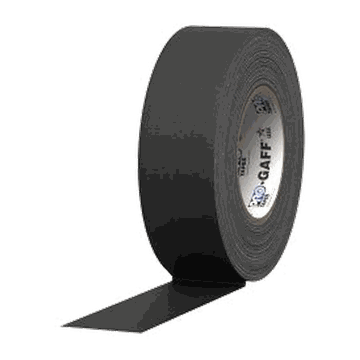
Pro Gaff matte black gaffer tape, unrolled

Pro Gaff — Gaffer Tape (Matte Cloth)

BackingCotton cloth
AdhesiveSynthetic rubber
Tensile strength45 lbs/in
Elongation5%
Thickness11 mils
Adhesion to steel80 oz/in
Service temperature10°C–93°C (50°F–200°F)

For comparison: 11 mils on cotton, and 80 oz/in adhesion — over six times the grip. Excellent tape, wrong job for a vinyl seam.

The key figure

Adhesion to steel of 12.6 oz/in against gaffer tape's 80 oz/in is not a weakness — it is the design. A seam tape has to hold two vinyl sheets together under turning feet and then let go without lifting the surface or leaving residue. Pro Splice also satisfies OSHA marking requirements and US government specification PPP-T-66D Type 1. OSHA stands for the Occupational Safety and Health Administration — the US federal workplace-safety regulator. Its marking rules (29 CFR 1910.144) set which colours must be used to mark physical hazards, so a tape that meets them is proven fit for safety marking, not just floor seaming. That is why the same product doubles as hazard-marking tape.

Figures are Pro Tapes published technical data sheet values for products Artstag supplies. Typical values — not for use in writing specifications.

Common questions

Frequently asked.

What tape is used to join dance floor vinyl?

Dance floor tape — a premium vinyl tape with a low-profile edge designed for seaming and joining dance floors, stage vinyl and temporary performance surfaces. It holds strongly and removes cleanly without damaging the vinyl.

Can I use gaffer tape on a dance floor seam?

It is not the right product. Gaffer tape has a cotton cloth backing whose woven edge lifts under the turning and sliding forces of dance, and its adhesive is not formulated for vinyl-to-vinyl seams. Use vinyl dance floor tape for seams and keep gaffer tape for general work.

Should dance floor strips overlap?

No. Butt the edges so they meet with no gap and no overlap, then centre the tape over the seam. An overlap creates a ridge that is both a trip hazard and a visible line.

Will the tape damage the vinyl when removed?

Dance floor tape is designed for clean removal from performance vinyl. Remove it slowly at a low angle rather than pulling straight up, and avoid leaving it down far longer than the run requires — time and heat make any adhesive harder to release.

Is dance floor tape safe for bare feet?

Yes — that is part of its purpose. The smooth, low-profile vinyl surface is gentle for dancers working barefoot or in soft shoes. A cotton gaffer tape seam is the opposite: its woven texture and raised edge are abrasive and can graze the foot on every turn, which is one reason gaffer tape is not used to seam a performance floor.

What colours does dance floor tape come in?

A range, so you can match the tape to the floor and keep the seam invisible. Common choices are black, grey and clear, plus other colours — you pick the one closest to the marley or stage vinyl you are seaming. A matched colour disappears underfoot; a clear tape works over patterned or light surfaces where no solid colour would blend.

Need the right tape for your job?

Artstag supplies Pro Tapes products direct across Singapore, Malaysia and Indonesia. Tell us the surface, the environment and how long it needs to hold, and we will point you to the right product.

Request a quote  ·  Ask a question  ·  All guides